
Unified Commerce Platform for Consignment Commerce

DigitBridge provides a unified commerce platform for managing the complete consignment lifecycle—from product onboarding and inventory management to sales tracking, partner collaboration, settlement processing, and omnichannel operations. The result is a scalable, transparent, and profitable foundation for modern consignment commerce.

Consignment is a powerful commerce model that enables businesses to expand product offerings, strengthen trading partner relationships, and optimize working capital.

By paying for inventory only after it sells, retailers can reduce upfront investment, minimize inventory risk, and accelerate assortment growth. However, successful consignment operations require the seamless coordination of product data, inventory ownership, stock movements, sales activity, commissions, settlements, and financial reconciliation across a complex network of suppliers, retailers, and sales channels.

Unified Commerce Platform for Consignment Commerce

Consignment is a powerful commerce model that enables businesses to expand product offerings, strengthen trading partner relationships, and optimize working capital
By paying for inventory only after it sells, retailers can reduce upfront investment, minimize inventory risk, and accelerate assortment growth. However, successful consignment operations require the seamless coordination of product data, inventory ownership, stock movements, sales activity, commissions, settlements, and financial reconciliation across a complex network of suppliers, retailers, and sales channels.

DigitBridge provides a unified commerce platform for managing the complete consignment lifecycle—from product onboarding and inventory management to sales tracking, partner collaboration, settlement processing, and omnichannel operations. The result is a scalable, transparent, and profitable foundation for modern consignment commerce.

Why Businesses Use Consignment


Consignment enables businesses to:

DigitBridge | Consignment Commerce 26/07

Expand product assortments without increasing inventory investment

DigitBridge | Consignment Commerce 26/07

Reduce upfront capital requirements and improve cash flow

DigitBridge | Consignment Commerce 26/07

Lower inventory and financial risk

DigitBridge | Consignment Commerce 26/07

Test new products, categories, and markets with greater flexibility

DigitBridge | Consignment Commerce 26/07

Strengthen relationships between retailers, suppliers, and brands

DigitBridge | Consignment Commerce 26/07

Improve product availability and customer choice

DigitBridge | Consignment Commerce 26/07

Create new revenue and growth opportunities

For retailers, consignment provides a cost-effective way to expand product offerings without tying up significant working capital in inventory. For suppliers and brands, it creates opportunities to increase market reach, grow wholesale and retail channel presence, and accelerate product exposure.

The challenge

lies in maintaining visibility, control, and accountability across consigned inventory.

Why Businesses Use Consignment


Consignment enables businesses to:

DigitBridge | Consignment Commerce 26/07

Expand product assortments without increasing inventory investment

DigitBridge | Consignment Commerce 26/07

Reduce upfront capital requirements and improve cash flow

DigitBridge | Consignment Commerce 26/07

Lower inventory and financial risk

DigitBridge | Consignment Commerce 26/07

Test new products, categories, and markets with greater flexibility

DigitBridge | Consignment Commerce 26/07

Strengthen relationships between retailers, suppliers, and brands

DigitBridge | Consignment Commerce 26/07

Improve product availability and customer choice

DigitBridge | Consignment Commerce 26/07

Create new revenue and growth opportunities

For retailers, consignment provides a cost-effective way to expand product offerings without tying up significant working capital in inventory. For suppliers and brands, it creates opportunities to increase market reach, grow wholesale and retail channel presence, and accelerate product exposure.

The challenge

lies in maintaining visibility, control, and accountability across consigned inventory.

Consignment Creates Unique Operational Challenges


Unlike traditional inventory, consigned products introduce additional requirements. Businesses must track:

DigitBridge | Consignment Commerce 26/07

Inventory ownership

DigitBridge | Consignment Commerce 26/07

Product data

DigitBridge | Consignment Commerce 26/07

Product locations

DigitBridge | Consignment Commerce 26/07

Sales activity

DigitBridge | Consignment Commerce 26/07

Supplier relationships

efficiency

Settlement calculations

DigitBridge | Consignment Commerce 26/07

Commission structures

DigitBridge | Consignment Commerce 26/07

Inventory returns

save-money

Financial obligations

Many businesses manage these processes manually through spreadsheets and disconnected systems. As product assortments grow, complexity increases rapidly. The challenge is not acquiring consignment inventory. The challenge is managing it efficiently and accurately.

Consignment Creates Unique Operational Challenges


Unlike traditional inventory, consigned products introduce additional requirements. Businesses must track:

DigitBridge | Consignment Commerce 26/07

Inventory ownership

DigitBridge | Consignment Commerce 26/07

Product data

DigitBridge | Consignment Commerce 26/07

Product locations

DigitBridge | Consignment Commerce 26/07

Sales activity

DigitBridge | Consignment Commerce 26/07

Supplier relationships

efficiency

Settlement calculations

DigitBridge | Consignment Commerce 26/07

Commission structures

DigitBridge | Consignment Commerce 26/07

Inventory returns

save-money

Financial obligations

Many businesses manage these processes manually through spreadsheets and disconnected systems. As product assortments grow, complexity increases rapidly. The challenge is not acquiring consignment inventory. The challenge is managing it efficiently and accurately.

The Unified Commerce Platform Connects Inventory, Sales, and Settlements


Consignment requires visibility across the entire product lifecycle.

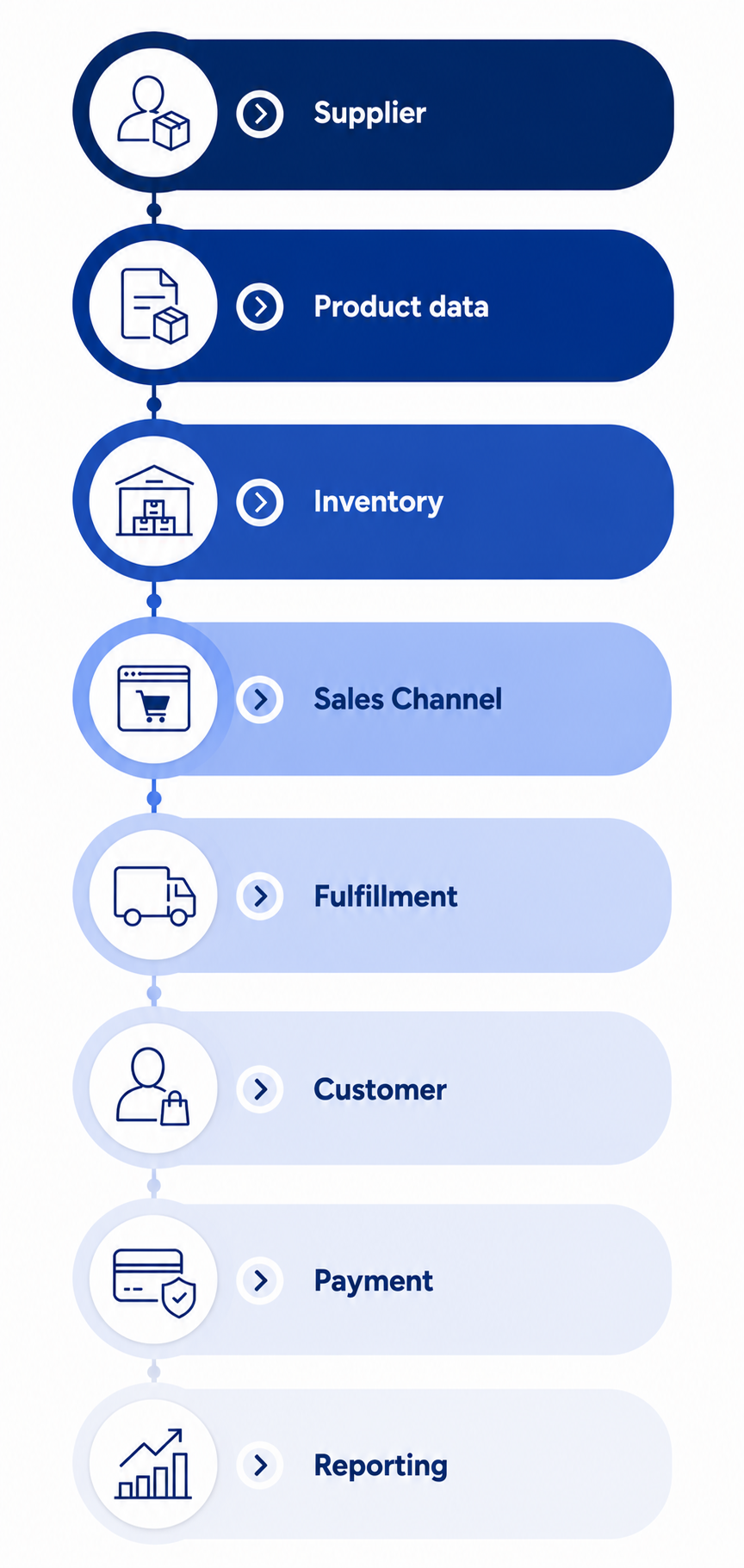
The Unified Commerce Platform connects:

DigitBridge | Consignment Commerce 26/07

Many businesses manage these processes manually through spreadsheets and disconnected systems. As product assortments grow, complexity increases rapidly. The challenge is not acquiring consignment inventory. The challenge is managing it efficiently and accurately.

The Unified Commerce Platform Connects Inventory, Sales, and Settlements


Consignment requires visibility across the entire product lifecycle.

The Unified Commerce Platform connects:
DigitBridge | Consignment Commerce 26/07

Many businesses manage these processes manually through spreadsheets and disconnected systems. As product assortments grow, complexity increases rapidly. The challenge is not acquiring consignment inventory. The challenge is managing it efficiently and accurately.

Built for Consignment Operations


DigitBridge | Consignment Commerce 26/07

Consignment Inventory Management

Maintain visibility into:

  • Product Information
  • Consigned inventory
  • Owned inventory
  • Inventory ownership
  • Product availability
  • Inventory movement
  • Product locations

Track inventory accurately regardless of ownership structure.

DigitBridge | Consignment Commerce 26/07

Product & Supplier Visibility for Retailer

Connect products directly to supplier relationships.
Manage:

  • Supplier records
  • Product data
  • Product ownership
  • Product performance
  • Supplier-specific assortments
  • Vendor agreements
  • Purchase order management

Create a complete view of supplier and inventory activity.

DigitBridge | Consignment Commerce 26/07

Product & Supplier Visibility for Supplier

Connect products directly to retailer relationships.
Manage:

  • Retailer records
  • Product data
  • Product ownership
  • Product performance
  • Product Movement
  • Consignment retailer agreements
  • Sales order management

Create a complete view of retailer and inventory activity.

DigitBridge | Consignment Commerce 26/07

Multi-Channel Sales Tracking

Consigned inventory may be sold through:

  • Ecommerce stores
  • Retail locations
  • Marketplaces
  • Wholesale channels

DigitBridge tracks sales activity across every channel while maintaining ownership visibility and financial accountability.

DigitBridge | Consignment Commerce 26/07

Settlement & Commission Management

Consignment requires accurate financial reconciliation.
Track:

  • Product sales
  • Settlement amounts to suppliers
  • Retailer commissions
  • Revenue sharing
  • Inventory balances

Reduce manual calculations while improving financial transparency.

DigitBridge | Consignment Commerce 26/07

Inventory Reporting & Analytics

Gain real-time visibility into:

  • Product performance
  • Retailer performance
  • Supplier performance
  • Sell-through rates
  • Inventory aging
  • Revenue generation
  • Settlement and payment activity

Leverage real-time insights to make smarter inventory decisions, improve partner collaboration, and strengthen communication between retailers and suppliers.

Built for Modern Wholesale Selling


DigitBridge | Consignment Commerce 26/07

Consignment Inventory Management

Maintain visibility into:

  • Product Information
  • Consigned inventory
  • Owned inventory
  • Inventory ownership
  • Product availability
  • Inventory movement
  • Product locations

Track inventory accurately regardless of ownership structure.

DigitBridge | Consignment Commerce 26/07

Product & Supplier Visibility for Retailer

Connect products directly to supplier relationships.
Manage:

  • Supplier records
  • Product data
  • Product ownership
  • Product performance
  • Supplier-specific assortments
  • Vendor agreements
  • Purchase order management

Create a complete view of supplier and inventory activity.

DigitBridge | Consignment Commerce 26/07

Product & Supplier Visibility for Supplier

Connect products directly to retailer relationships.
Manage:

  • Retailer records
  • Product data
  • Product ownership
  • Product performance
  • Product Movement
  • Consignment retailer agreements
  • Sales order management

Create a complete view of retailer and inventory activity.

DigitBridge | Consignment Commerce 26/07

Multi-Channel Sales Tracking

Consigned inventory may be sold through:

  • Ecommerce stores
  • Retail locations
  • Marketplaces
  • Wholesale channels

DigitBridge tracks sales activity across every channel while maintaining ownership visibility and financial accountability.

DigitBridge | Consignment Commerce 26/07

Settlement & Commission Management

Consignment requires accurate financial reconciliation.
Track:

  • Product sales
  • Settlement amounts to suppliers
  • Retailer commissions
  • Revenue sharing
  • Inventory balances

Reduce manual calculations while improving financial transparency.

DigitBridge | Consignment Commerce 26/07

Inventory Reporting & Analytics

Gain real-time visibility into:

  • Product performance
  • Retailer performance
  • Supplier performance
  • Sell-through rates
  • Inventory aging
  • Revenue generation
  • Settlement and payment activity

Leverage real-time insights to make smarter inventory decisions, improve partner collaboration, and strengthen communication between retailers and suppliers.

Why Businesses Invest in Consignment Commerce


For

 Retailers and Buyers

DigitBridge | Consignment Commerce 26/07

Reduce Inventory Investment

Expand product assortments without purchasing inventory upfront, minimizing capital requirements and inventory risk.

DigitBridge | Consignment Commerce 26/07

Improve Cash Flow

Pay suppliers only after products are sold, preserving working capital and improving financial flexibility.

DigitBridge | Consignment Commerce 26/07

Expand Product Selection

Offer a broader range of products and brands without increasing inventory ownership or carrying costs.

DigitBridge | Consignment Commerce 26/07

Strengthen Supplier Relationships

Build stronger partnerships through transparent inventory management, sales reporting, and settlement processes.

DigitBridge | Consignment Commerce 26/07

Improve Inventory Visibility

Maintain real-time visibility into product ownership, inventory availability, sales performance, and financial obligations.

DigitBridge | Consignment Commerce 26/07

Scale Consignment Operations

Support larger assortments, more suppliers, additional locations, and multiple sales channels without increasing operational complexity.

For

Suppliers and Brands

DigitBridge | Consignment Commerce 26/07

Expand Market Reach

Increase product exposure and sales opportunities by placing inventory in more retail locations and sales channels.

DigitBridge | Consignment Commerce 26/07

Accelerate Revenue Growth

Drive sell-through and market penetration without requiring retailers to make significant upfront inventory investments.

DigitBridge | Consignment Commerce 26/07

Strengthen Retailer Relationships

Deliver greater value to retail partners while building long-term, mutually beneficial business relationships.

DigitBridge | Consignment Commerce 26/07

Improve Inventory Visibility

Maintain real-time insight into product ownership, inventory locations, stock levels, sales activity, and product performance.

DigitBridge | Consignment Commerce 26/07

Increase Inventory Control

Track consigned inventory throughout its lifecycle and ensure accurate reporting, settlements, and financial reconciliation.

DigitBridge | Consignment Commerce 26/07

Scale Consignment Programs

Efficiently support more products, retailers, and sales channels while maintaining operational visibility and control.

Why Businesses Invest in Consignment Commerce


For

 Retailers and Buyers

DigitBridge | Consignment Commerce 26/07

Reduce Inventory Investment

Expand product assortments without purchasing inventory upfront, minimizing capital requirements and inventory risk.

DigitBridge | Consignment Commerce 26/07

Improve Cash Flow

Pay suppliers only after products are sold, preserving working capital and improving financial flexibility.

DigitBridge | Consignment Commerce 26/07

Expand Product Selection

Offer a broader range of products and brands without increasing inventory ownership or carrying costs.

DigitBridge | Consignment Commerce 26/07

Strengthen Supplier Relationships

Build stronger partnerships through transparent inventory management, sales reporting, and settlement processes.

DigitBridge | Consignment Commerce 26/07

Improve Inventory Visibility

Maintain real-time visibility into product ownership, inventory availability, sales performance, and financial obligations.

DigitBridge | Consignment Commerce 26/07

Scale Consignment Operations

Support larger assortments, more suppliers, additional locations, and multiple sales channels without increasing operational complexity.

For

Suppliers and Brands

DigitBridge | Consignment Commerce 26/07

Expand Market Reach

Increase product exposure and sales opportunities by placing inventory in more retail locations and sales channels.

DigitBridge | Consignment Commerce 26/07

Accelerate Revenue Growth

Drive sell-through and market penetration without requiring retailers to make significant upfront inventory investments.

DigitBridge | Consignment Commerce 26/07

Strengthen Retailer Relationships

Deliver greater value to retail partners while building long-term, mutually beneficial business relationships.

DigitBridge | Consignment Commerce 26/07

Improve Inventory Visibility

Maintain real-time insight into product ownership, inventory locations, stock levels, sales activity, and product performance.

DigitBridge | Consignment Commerce 26/07

Increase Inventory Control

Track consigned inventory throughout its lifecycle and ensure accurate reporting, settlements, and financial reconciliation.

DigitBridge | Consignment Commerce 26/07

Scale Consignment Programs

Efficiently support more products, retailers, and sales channels while maintaining operational visibility and control.

Consignment Requires More Than Inventory Tracking

Many businesses assume consignment is simply another inventory model.
In reality, consignment requires businesses to manage inventory ownership, supplier accountability, sales tracking, settlements, and financial transparency simultaneously.

The most successful businesses connect these processes through a unified operating model.

DigitBridge helps businesses manage consignment inventory across ecommerce, marketplaces, wholesale channels, and retail operations while maintaining complete visibility and control.

DigitBridge | Consignment Commerce 26/07

Consignment Requires More Than Inventory Tracking

Many businesses assume consignment is simply another inventory model.
In reality, consignment requires businesses to manage inventory ownership, supplier accountability, sales tracking, settlements, and financial transparency simultaneously.

The most successful businesses connect these processes through a unified operating model.
DigitBridge helps businesses manage consignment inventory across ecommerce, marketplaces, wholesale channels, and retail operations while maintaining complete visibility and control.

DigitBridge | Consignment Commerce 26/07

Frequently asked questions


What is Consignment Commerce?

Consignment Commerce is a business model where inventory is provided by a supplier, brand, or partner but remains owned by that supplier until it is sold. The seller pays the supplier only after a sale occurs, according to an agreed-upon settlement structure.

What are the benefits of consignment inventory?

Consignment inventory benefits both retailers and suppliers. Retailers can expand product assortments, improve cash flow, and reduce inventory investment by paying for products only after they are sold. Suppliers can increase market reach, grow retail distribution, improve product visibility, and strengthen retailer relationships. Together, the consignment model reduces financial risk, supports growth, and creates new revenue opportunities for both parties.

What industries commonly use consignment?

Consignment is commonly used in jewelry, luxury goods, apparel, footwear, home décor, antiques, collectibles, specialty retail, and other product-focused industries.

What are the biggest challenges of consignment management?

Consignment management introduces unique operational, inventory, and financial complexities for both retailers and suppliers. Common challenges include maintaining accurate inventory ownership records, synchronizing product data across partners, managing supplier and retailer relationships, calculating commissions and settlements, tracking product performance, reconciling sales transactions, and ensuring financial transparency.

How do businesses track consigned inventory?

The most effective approach is to use a centralized platform that tracks inventory ownership, product information, inventory movements, sales activity, and settlement obligations in real time. This provides retailers and suppliers with a single source of truth for managing consigned inventory, improving visibility, accountability, and financial accuracy.

What is a consignment settlement?

A consignment settlement is the financial reconciliation process where sales are reported and payments are calculated based on the agreement between the seller and the inventory owner.

Can businesses sell consigned inventory across multiple channels?

Absolutely. One of the greatest advantages of consignment commerce is the ability to distribute and sell products across multiple channels without requiring retailers to purchase inventory upfront. By maintaining centralized visibility into inventory ownership, product availability, sales activity, and settlement requirements, both retailers and suppliers can confidently support omnichannel growth while ensuring accurate reporting, reconciliation, and financial transparency.

How does Unified Commerce Platform support consignment operations?

A unified commerce platform connects suppliers, inventory, customers, sales channels, orders, settlements, and reporting within a single operating model—providing greater visibility, accountability, operational efficiency, and control across the entire commerce ecosystem.

Can DigitBridge manage both owned and consigned inventory?

Yes. DigitBridge supports businesses that manage a combination of owned inventory, consigned inventory, dropship inventory, marketplace inventory, and other fulfillment models within a unified commerce platform.

Frequently asked questions


What is Consignment Commerce?

Consignment Commerce is a business model where inventory is provided by a supplier, brand, or partner but remains owned by that supplier until it is sold. The seller pays the supplier only after a sale occurs, according to an agreed-upon settlement structure.

What are the benefits of consignment inventory?

Consignment inventory benefits both retailers and suppliers. Retailers can expand product assortments, improve cash flow, and reduce inventory investment by paying for products only after they are sold. Suppliers can increase market reach, grow retail distribution, improve product visibility, and strengthen retailer relationships. Together, the consignment model reduces financial risk, supports growth, and creates new revenue opportunities for both parties.

What industries commonly use consignment?

Consignment is commonly used in jewelry, luxury goods, apparel, footwear, home décor, antiques, collectibles, specialty retail, and other product-focused industries.

What are the biggest challenges of consignment management?

Consignment management introduces unique operational, inventory, and financial complexities for both retailers and suppliers. Common challenges include maintaining accurate inventory ownership records, synchronizing product data across partners, managing supplier and retailer relationships, calculating commissions and settlements, tracking product performance, reconciling sales transactions, and ensuring financial transparency.

How do businesses track consigned inventory?

The most effective approach is to use a centralized platform that tracks inventory ownership, product information, inventory movements, sales activity, and settlement obligations in real time. This provides retailers and suppliers with a single source of truth for managing consigned inventory, improving visibility, accountability, and financial accuracy.

What is a consignment settlement?

A consignment settlement is the financial reconciliation process where sales are reported and payments are calculated based on the agreement between the seller and the inventory owner.

Can businesses sell consigned inventory across multiple channels?

Absolutely. One of the greatest advantages of consignment commerce is the ability to distribute and sell products across multiple channels without requiring retailers to purchase inventory upfront. By maintaining centralized visibility into inventory ownership, product availability, sales activity, and settlement requirements, both retailers and suppliers can confidently support omnichannel growth while ensuring accurate reporting, reconciliation, and financial transparency.

How does Unified Commerce Platform support consignment operations?

A unified commerce platform connects suppliers, inventory, customers, sales channels, orders, settlements, and reporting within a single operating model—providing greater visibility, accountability, operational efficiency, and control across the entire commerce ecosystem.

Can DigitBridge manage both owned and consigned inventory?

Yes. DigitBridge supports businesses that manage a combination of owned inventory, consigned inventory, dropship inventory, marketplace inventory, and other fulfillment models within a unified commerce platform.

Unified Commerce for Modern 3PL Providers

DigitBridge helps 3PL providers unify inventory, fulfillment, client operations, shipping carrier integration, and commerce connectivity into a single operation platform—creating the digital foundation for scalable logistics operations and long-term client success.

Book a Demo

Connect Warehousing, Fulfillment, Inventory, and Client Operations in One Platform

Today’s 3PL providers are expected to do far more than move inventory. Clients expect real-time inventory visibility, ecommerce connectivity, marketplace integrations, fulfillment transparency, reporting, and seamless operational coordination across every sales channel.