Unified Commerce Platform for Omnichannel Commerce

DigitBridge helps businesses unify every touchpoint through a unified commerce platform. By connecting products, inventory, orders, customers, and fulfillment across all channels, DigitBridge provides the operational foundation needed to deliver exceptional omnichannel experiences and scale with confidence.

Create Seamless Customer Experiences Across Every Channel

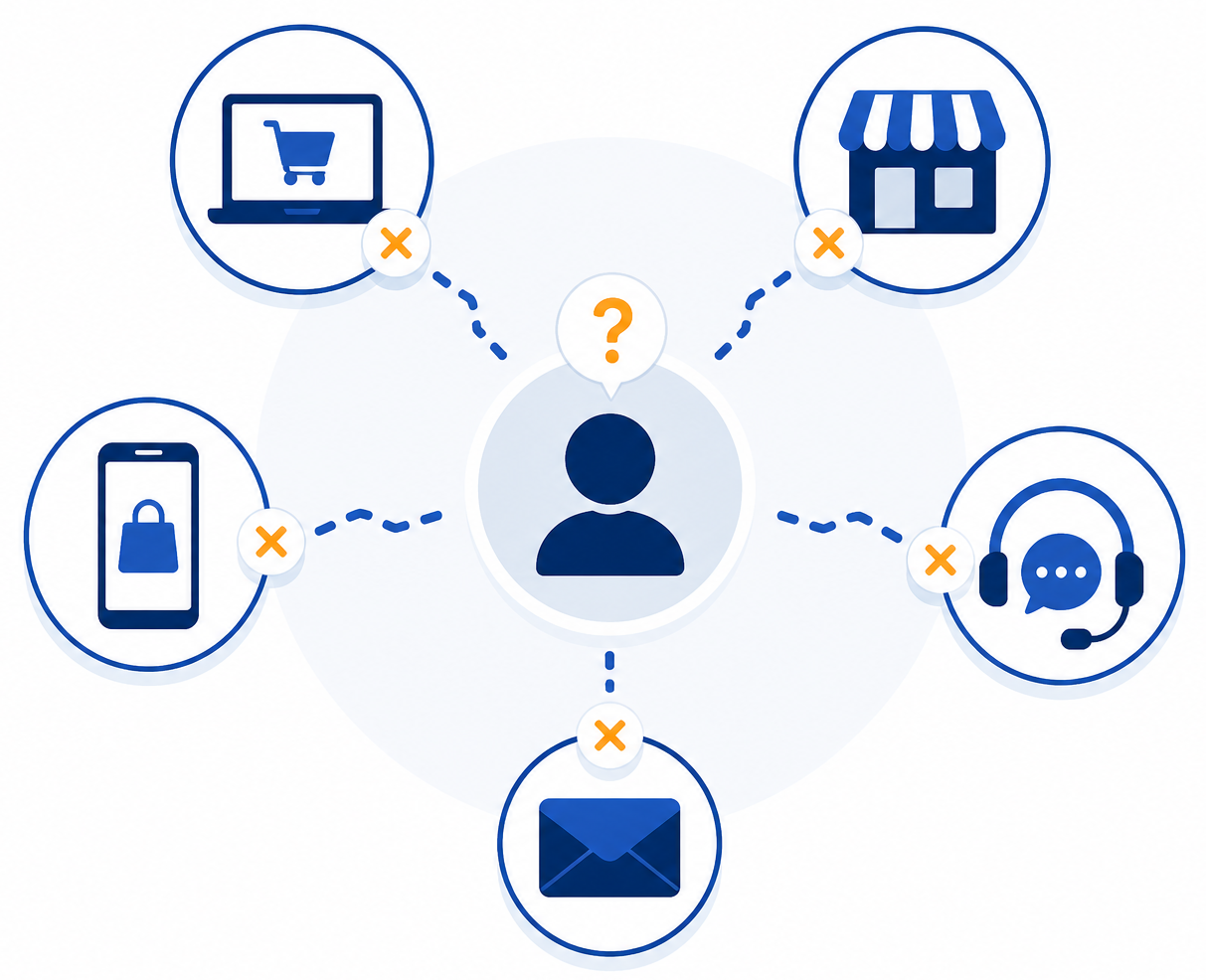
Today’s customers expect to engage with brands wherever and however they choose. They may discover a product on social media, research it on an online marketplace, visit a retail store to experience it in person, complete the purchase on your website, and later contact customer support through an entirely different channel.

Customers no longer think in terms of channels—they think in terms of experiences. For businesses, the challenge is delivering a seamless and consistent experience while managing product information, inventory, suppliers, orders, fulfillment, customer interactions, and multiple sales channels behind the scenes.

Unified Commerce Platform for Marketplace Commerce

Create Seamless Customer Experiences Across Every Channel

Today’s customers expect to engage with brands wherever and however they choose. They may discover a product on social media, research it on an online marketplace, visit a retail store to experience it in person, complete the purchase on your website, and later contact customer support through an entirely different channel.
Customers no longer think in terms of channels—they think in terms of experiences. For businesses, the challenge is delivering a seamless and consistent experience while managing product information, inventory, suppliers, orders, fulfillment, customer interactions, and multiple sales channels behind the scenes.

DigitBridge helps businesses unify every touchpoint through a unified commerce platform. By connecting products, inventory, orders, customers, and fulfillment across all channels, DigitBridge provides the operational foundation needed to deliver exceptional omnichannel experiences and scale with confidence.

What Is Omnichannel Commerce?


Omnichannel Commerce is a strategy that creates a consistent customer experience across every sales and engagement channel. Rather than treating channels independently, omnichannel businesses create a connected experience regardless of where customers interact with the brand. Examples include:

DigitBridge | Omnichannel Commerce 26/07

Ecommerce websites

DigitBridge | Omnichannel Commerce 26/07

Marketplaces

DigitBridge | Omnichannel Commerce 26/07

Social commerce

DigitBridge | Omnichannel Commerce 26/07

Retail locations

DigitBridge | Omnichannel Commerce 26/07

Wholesale channels

DigitBridge | Omnichannel Commerce 26/07

Customer service channels

DigitBridge | Omnichannel Commerce 26/07

Mobile experiences

The goal is simple:

Deliver a seamless customer experience wherever customers choose to engage.

What Is Omnichannel Commerce?


Omnichannel Commerce is a strategy that creates a consistent customer experience across every sales and engagement channel.

Rather than treating channels independently, omnichannel businesses create a connected experience regardless of where customers interact with the brand. Examples include:

DigitBridge | Omnichannel Commerce 26/07

Ecommerce websites

DigitBridge | Omnichannel Commerce 26/07

Marketplaces

DigitBridge | Omnichannel Commerce 26/07

Social commerce

DigitBridge | Omnichannel Commerce 26/07

Retail locations

DigitBridge | Omnichannel Commerce 26/07

Wholesale channels

DigitBridge | Omnichannel Commerce 26/07

Customer service channels

DigitBridge | Omnichannel Commerce 26/07

Mobile experiences

The goal is simple:

Deliver a seamless customer experience wherever customers choose to engage.

Customer Expectations Have Changed

Today’s customers expect a seamless experience at every stage of their buying journey. They expect:
  • Accurate and complete product information
  • Real-time inventory visibility
  • Flexible purchasing and fulfillment options
  • Fast, reliable order delivery
  • Consistent interactions across every touchpoint
Customers don’t differentiate between online stores, marketplaces, retail locations, social commerce, or customer service channels. They expect your brand to operate as one connected business.
DigitBridge | Omnichannel Commerce 26/07
When channels operate in silos, the consequences are immediate:
DigitBridge | Omnichannel Commerce 26/07

Conflicting product information

DigitBridge | Omnichannel Commerce 26/07

Inventory inaccuracies and stockouts

DigitBridge | Omnichannel Commerce 26/07

Order errors and fulfillment delays

DigitBridge | Omnichannel Commerce 26/07

Disconnected customer experiences

DigitBridge | Omnichannel Commerce 26/07

Lost revenue and reduced customer loyalty

The most successful businesses recognize that omnichannel commerce is not simply about selling through multiple channels—it’s about creating a unified commerce ecosystem where products, inventory, orders, customers, and operations stay synchronized across the entire business.

Customer Expectations Have Changed

Today’s customers expect a seamless experience at every stage of their buying journey. They expect:
  • Accurate and complete product information
  • Real-time inventory visibility
  • Flexible purchasing and fulfillment options
  • Fast, reliable order delivery
  • Consistent interactions across every touchpoint
Customers don’t differentiate between online stores, marketplaces, retail locations, social commerce, or customer service channels. They expect your brand to operate as one connected business.
DigitBridge | Omnichannel Commerce 26/07
Customers don’t differentiate between online stores, marketplaces, retail locations, social commerce, or customer service channels. They expect your brand to operate as one connected business. When channels operate in silos, the consequences are immediate:
DigitBridge | Omnichannel Commerce 26/07

Conflicting product information

DigitBridge | Omnichannel Commerce 26/07

Inventory inaccuracies and stockouts

DigitBridge | Omnichannel Commerce 26/07

Order errors and fulfillment delays

DigitBridge | Omnichannel Commerce 26/07

Disconnected customer experiences

DigitBridge | Omnichannel Commerce 26/07

Lost revenue and reduced customer loyalty

The most successful businesses recognize that omnichannel commerce is not simply about selling through multiple channels—it’s about creating a unified commerce ecosystem where products, inventory, orders, customers, and operations stay synchronized across the entire business.

Omnichannel Commerce Requires A Unified Commerce Platform


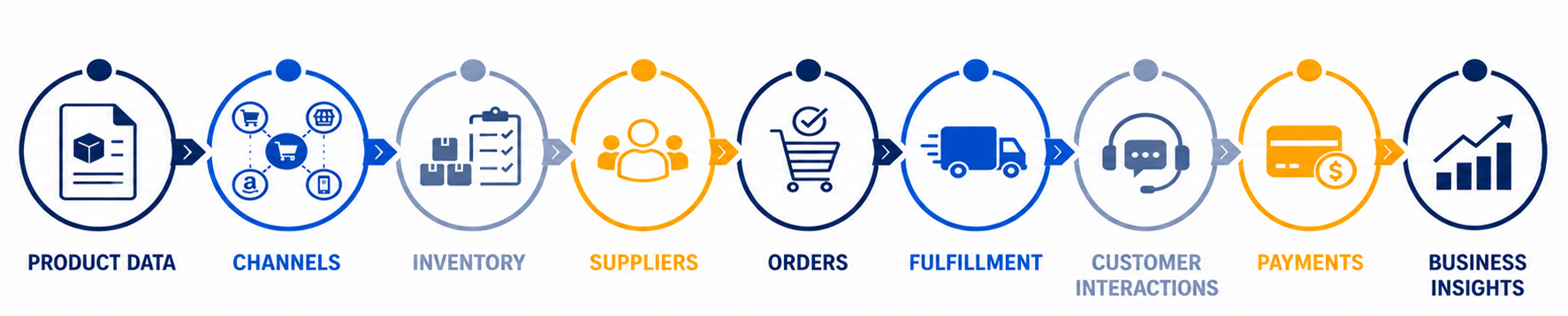
Many businesses assume that omnichannel commerce simply means adding more sales channels. In reality, success depends on how well those channels are connected behind the scenes. A Unified Commerce Platform eliminates these silos by connecting every core commerce function into a single operational ecosystem:
DigitBridge | Omnichannel Commerce 26/07

With connected data and processes, businesses gain a single source of truth across the entire commerce operation. This enables accurate inventory visibility, streamlined fulfillment, consistent customer experiences, and informed decision-making across every channel.

Omnichannel Commerce is the customer experience. A Unified Commerce Platform is the operational foundation that makes that experience possible.

Omnichannel Commerce Requires A Unified Commerce Platform


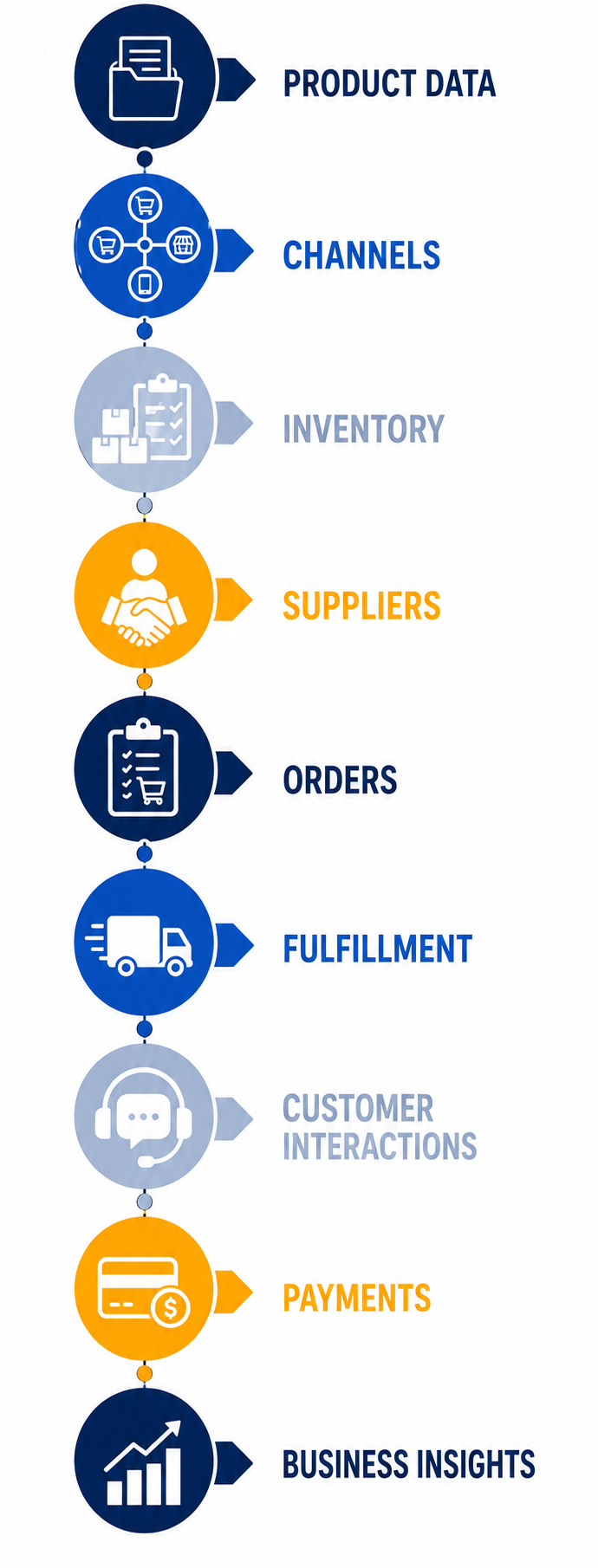
Many businesses assume that omnichannel commerce simply means adding more sales channels. In reality, success depends on how well those channels are connected behind the scenes. A Unified Commerce Platform eliminates these silos by connecting every core commerce function into a single operational ecosystem:
DigitBridge | Omnichannel Commerce 26/07

With connected data and processes, businesses gain a single source of truth across the entire commerce operation. This enables accurate inventory visibility, streamlined fulfillment, consistent customer experiences, and informed decision-making across every channel.

Omnichannel Commerce is the customer experience. A Unified Commerce Platform is the operational foundation that makes that experience possible.

Built for Omnichannel Growth


DigitBridge | Omnichannel Commerce 26/07

Unified Product Information

Manage product information and digital commerce operations from a single source of truth. Maintain and centralize:

  • Product copywritings and descriptions
  • Product images
  • Digital assets and media
  • Product attributes and specifications
  • Marketing content
  • Channel-specific product catalogs
  • Digital sales promotions
  • Digital line sheets

Create product information once and distribute it automatically according to the unique requirements of each sales channel, including wholesale, DTC, marketplaces, dropship, and retail partners.

DigitBridge | Omnichannel Commerce 26/07

Real-Time Inventory Visibility

Gain a single, accurate view of inventory across your entire commerce ecosystem, including:

  • Ecommerce stores
  • Online marketplaces
  • Retail locations
  • Wholesale channels
  • Distribution centers and warehouses
  • Third-party logistics (3PL) providers

With real-time inventory synchronization across every channel and fulfillment location, businesses can prevent overselling, reduce stock discrepancies, optimize inventory allocation, and improve order fulfillment accuracy.

DigitBridge | Omnichannel Commerce 26/07

Connected Order Management

DigitBridge unifies the entire order lifecycle by connecting: Orders → Inventory → Fulfillment → Customers → Payments
Manage all order types from a single platform:

  • Wholesale orders
  • DTC ecommerce orders
  • Marketplace orders
  • Retail orders
  • Dropship orders
  • EDI transactions

With a shared workflow and real-time visibility, teams can allocate inventory accurately, automate fulfillment processes, improve customer service, and maintain operational control across every sales channel.

DigitBridge | Omnichannel Commerce 26/07

Fulfillment Coordination

DigitBridge provides a unified fulfillment foundation that connects:
Orders → Inventory → Warehouses → Fulfillment Partners → Customers
Support multiple fulfillment models, including:

  • Direct-to-consumer shipping
  • Wholesale distribution
  • Marketplace fulfillment
  • Dropship programs
  • 3PL-managed operations

With centralized visibility and standardized workflows, businesses can fulfill orders faster, reduce operational costs, improve delivery performance, and provide a consistent customer experience across every channel.

DigitBridge | Omnichannel Commerce 26/07

Unified Commerce Intelligence

DigitBridge provides a unified view of customers, sales, and channel performance, enabling businesses to gain deeper insights into:

  • Consumer purchasing behavior
  • Wholesale customer buying patterns
  • Product performance across channels
  • Customer and account lifetime value
  • Channel profitability and performance
  • Demand and inventory trends
  • Customer engagement and retention
  • Sales growth opportunities

By connecting wholesale and DTC operations on a single platform, businesses can analyze performance across every customer, product, and sales channel from one source of truth.

Built for Omnichannel Growth


DigitBridge | Omnichannel Commerce 26/07

Unified Product Information

Manage product information and digital commerce operations from a single source of truth. Maintain and centralize:

  • Product copywritings and descriptions
  • Product images
  • Digital assets and media
  • Product attributes and specifications
  • Marketing content
  • Channel-specific product catalogs
  • Digital sales promotions
  • Digital line sheets

Create product information once and distribute it automatically according to the unique requirements of each sales channel, including wholesale, DTC, marketplaces, dropship, and retail partners.

DigitBridge | Omnichannel Commerce 26/07

Real-Time Inventory Visibility

Gain a single, accurate view of inventory across your entire commerce ecosystem, including:

  • Ecommerce stores
  • Online marketplaces
  • Retail locations
  • Wholesale channels
  • Distribution centers and warehouses
  • Third-party logistics (3PL) providers

With real-time inventory synchronization across every channel and fulfillment location, businesses can prevent overselling, reduce stock discrepancies, optimize inventory allocation, and improve order fulfillment accuracy.

DigitBridge | Omnichannel Commerce 26/07

Connected Order Management

DigitBridge unifies the entire order lifecycle by connecting: Orders → Inventory → Fulfillment → Customers → Payments
Manage all order types from a single platform:

  • Wholesale orders
  • DTC ecommerce orders
  • Marketplace orders
  • Retail orders
  • Dropship orders
  • EDI transactions

With a shared workflow and real-time visibility, teams can allocate inventory accurately, automate fulfillment processes, improve customer service, and maintain operational control across every sales channel.

DigitBridge | Omnichannel Commerce 26/07

Fulfillment Coordination

DigitBridge provides a unified fulfillment foundation that connects:
Orders → Inventory → Warehouses → Fulfillment Partners → Customers
Support multiple fulfillment models, including:

  • Direct-to-consumer shipping
  • Wholesale distribution
  • Marketplace fulfillment
  • Dropship programs
  • 3PL-managed operations

With centralized visibility and standardized workflows, businesses can fulfill orders faster, reduce operational costs, improve delivery performance, and provide a consistent customer experience across every channel.

DigitBridge | Omnichannel Commerce 26/07

Unified Commerce Intelligence

DigitBridge provides a unified view of customers, sales, and channel performance, enabling businesses to gain deeper insights into:

  • Consumer purchasing behavior
  • Wholesale customer buying patterns
  • Product performance across channels
  • Customer and account lifetime value
  • Channel profitability and performance
  • Demand and inventory trends
  • Customer engagement and retention
  • Sales growth opportunities

By connecting wholesale and DTC operations on a single platform, businesses can analyze performance across every customer, product, and sales channel from one source of truth.

Why Businesses Invest in Omnichannel Commerce


DigitBridge | Omnichannel Commerce 26/07

Improve Customer Experience

Create a seamless experience across every customer touchpoint.

DigitBridge | Omnichannel Commerce 26/07

Increase Customer Loyalty

Deliver consistent experiences that strengthen long-term customer relationships.

DigitBridge | Omnichannel Commerce 26/07

Improve Operational Visibility

Connect channels, inventory, orders, and fulfillment through a single source of truth.

DigitBridge | Omnichannel Commerce 26/07

Reduce Operational Complexity

Eliminate disconnected systems and manual processes.

DigitBridge | Omnichannel Commerce 26/07

Support Future Growth

Create a scalable foundation that supports new channels and evolving customer expectations.

Why Businesses Invest in Omnichannel Commerce


DigitBridge | Omnichannel Commerce 26/07

Improve Customer Experience

Create a seamless experience across every customer touchpoint.

DigitBridge | Omnichannel Commerce 26/07

Increase Customer Loyalty

Deliver consistent experiences that strengthen long-term customer relationships.

DigitBridge | Omnichannel Commerce 26/07

Improve Operational Visibility

Connect channels, inventory, orders, and fulfillment through a single source of truth.

DigitBridge | Omnichannel Commerce 26/07

Reduce Operational Complexity

Eliminate disconnected systems and manual processes.

DigitBridge | Omnichannel Commerce 26/07

Support Future Growth

Create a scalable foundation that supports new channels and evolving customer expectations.
DigitBridge | Omnichannel Commerce 26/07

Omnichannel Commerce Is Not About More Channels

Many businesses think omnichannel growth is achieved by adding more sales channels. In reality, success comes from connecting them.
The brands that deliver exceptional customer experiences are not necessarily the ones with the largest channel presence—they are the ones with the operational capabilities to support consistent, reliable service across every customer touchpoint.
DigitBridge brings together products, inventory, suppliers, orders, fulfillment, and customer interactions through a unified commerce platform, enabling businesses to operate every channel as part of a single commerce ecosystem.
With DigitBridge, businesses can connect channels, streamline operations, and deliver the seamless experiences customers expect—while building the foundation for scalable growth and the future of AI-driven commerce.

Omnichannel Commerce Is Not About More Channels

Many businesses think omnichannel growth is achieved by adding more sales channels. In reality, success comes from connecting them.
The brands that deliver exceptional customer experiences are not necessarily the ones with the largest channel presence—they are the ones with the operational capabilities to support consistent, reliable service across every customer touchpoint.
DigitBridge brings together products, inventory, suppliers, orders, fulfillment, and customer interactions through a unified commerce platform, enabling businesses to operate every channel as part of a single commerce ecosystem. With DigitBridge, businesses can connect channels, streamline operations, and deliver the seamless experiences customers expect—while building the foundation for scalable growth and the future of AI-driven commerce.

DigitBridge | Omnichannel Commerce 26/07

Frequently asked questions


What is Omnichannel Commerce?

Omnichannel Commerce is a business strategy that creates a seamless customer experience across multiple channels, including ecommerce stores, marketplaces, retail locations, social commerce platforms, customer service channels, and wholesale operations.

What is the difference between Omnichannel Commerce and Unified Commerce?

While the terms are often used interchangeably, they address different aspects of modern commerce.

Omnichannel Commerce focuses on the customer experience—ensuring customers can interact with your brand seamlessly across ecommerce, marketplaces, retail stores, social commerce, wholesale channels, and customer service touchpoints.

Unified Commerce focuses on the operational foundation behind those experiences. It connects the systems, data, and processes that power the business, including:

  • Product information
  • Suppliers and sourcing
  • Inventory
  • Orders
  • Fulfillment
  • Sales channels
  • Payments
  • Customer data

A Unified Commerce Platform provides the infrastructure that enables omnichannel commerce.

Why is Omnichannel Commerce important?

Customers increasingly interact with brands across multiple channels. Omnichannel Commerce helps businesses create consistent experiences, improve customer satisfaction, strengthen loyalty, and increase revenue opportunities.

What are examples of Omnichannel Commerce?

Examples include maintaining consistent inventory availability across channels, providing unified order tracking, synchronizing product information across retail locations, marketplaces, social platforms, and ecommerce stores, and delivering a seamless customer experience regardless of where a purchase occurs.

What challenges do businesses face when implementing Omnichannel Commerce?

Common challenges include disconnected systems, inconsistent product information, inventory synchronization issues, fragmented customer experiences, fulfillment complexity, and limited operational visibility.

How does a Unified Commerce Platform support Omnichannel Commerce?

A Unified Commerce Platform connects products, suppliers, inventory, orders, fulfillment, channels, and customer information into a single operating model, allowing businesses to deliver consistent experiences across every channel.

Can Omnichannel Commerce include wholesale and B2B channels?

Yes. Omnichannel Commerce can include ecommerce, marketplaces, retail locations, social commerce, wholesale customers, distributors, and other sales channels that contribute to the overall customer experience.

Why are businesses adopting Unified Commerce strategies?

Businesses are increasingly adopting Unified Commerce strategies to eliminate operational silos, improve visibility, and create a more connected and agile commerce operation.
Most importantly, a Unified Commerce Platform provides the digital foundation for future innovation. As AI becomes increasingly integrated into commerce, connected and centralized data is essential for powering intelligent automation, predictive insights, personalized experiences, and autonomous business operations.

Frequently asked questions


What is Omnichannel Commerce?

Omnichannel Commerce is a business strategy that creates a seamless customer experience across multiple channels, including ecommerce stores, marketplaces, retail locations, social commerce platforms, customer service channels, and wholesale operations.

What is the difference between Omnichannel Commerce and Unified Commerce?

While the terms are often used interchangeably, they address different aspects of modern commerce.

Omnichannel Commerce focuses on the customer experience—ensuring customers can interact with your brand seamlessly across ecommerce, marketplaces, retail stores, social commerce, wholesale channels, and customer service touchpoints.

Unified Commerce focuses on the operational foundation behind those experiences. It connects the systems, data, and processes that power the business, including:

  • Product information
  • Suppliers and sourcing
  • Inventory
  • Orders
  • Fulfillment
  • Sales channels
  • Payments
  • Customer data

A Unified Commerce Platform provides the infrastructure that enables omnichannel commerce.

Why is Omnichannel Commerce important?

Customers increasingly interact with brands across multiple channels. Omnichannel Commerce helps businesses create consistent experiences, improve customer satisfaction, strengthen loyalty, and increase revenue opportunities.

What are examples of Omnichannel Commerce?

Examples include maintaining consistent inventory availability across channels, providing unified order tracking, synchronizing product information across retail locations, marketplaces, social platforms, and ecommerce stores, and delivering a seamless customer experience regardless of where a purchase occurs.

What challenges do businesses face when implementing Omnichannel Commerce?

Common challenges include disconnected systems, inconsistent product information, inventory synchronization issues, fragmented customer experiences, fulfillment complexity, and limited operational visibility.

How does a Unified Commerce Platform support Omnichannel Commerce?

A Unified Commerce Platform connects products, suppliers, inventory, orders, fulfillment, channels, and customer information into a single operating model, allowing businesses to deliver consistent experiences across every channel.

Can Omnichannel Commerce include wholesale and B2B channels?

Yes. Omnichannel Commerce can include ecommerce, marketplaces, retail locations, social commerce, wholesale customers, distributors, and other sales channels that contribute to the overall customer experience.

Why are businesses adopting Unified Commerce strategies?

Businesses are increasingly adopting Unified Commerce strategies to eliminate operational silos, improve visibility, and create a more connected and agile commerce operation.
Most importantly, a Unified Commerce Platform provides the digital foundation for future innovation. As AI becomes increasingly integrated into commerce, connected and centralized data is essential for powering intelligent automation, predictive insights, personalized experiences, and autonomous business operations.

Unified Commerce for Modern 3PL Providers

DigitBridge helps 3PL providers unify inventory, fulfillment, client operations, shipping carrier integration, and commerce connectivity into a single operation platform—creating the digital foundation for scalable logistics operations and long-term client success.

Book a Demo

Connect Warehousing, Fulfillment, Inventory, and Client Operations in One Platform

Today’s 3PL providers are expected to do far more than move inventory. Clients expect real-time inventory visibility, ecommerce connectivity, marketplace integrations, fulfillment transparency, reporting, and seamless operational coordination across every sales channel.