
The Unified Commerce Platform for Brand Manufacturers & Wholesalers

DigitBridge helps brand manufacturers and wholesalers unify product data, pricing, inventory, orders, customers, payments, and commerce operations into a single unified digital platform built for modern commerce businesses.

Manage Products, Catalogs, Pricing, Inventory, and Omnichannel Operations from One Platform

Brand manufacturers and wholesalers don’t fall behind because they lack sales channels. They fall behind when increasing product complexity overwhelms systems that weren’t built for the demands of modern commerce.

As product catalogs expand, customer requirements become more specialized, and new channels emerge, disconnected systems create inefficiencies in the operation that slow growth.

The Unified Commerce Platform for Brand Manufacturers & Wholesalers

Manage Products, Catalogs, Pricing, Inventory, and Omnichannel Operations from One Platform

Brand manufacturers and wholesalers don’t fall behind because they lack sales channels. They fall behind when increasing product complexity overwhelms systems that weren’t built for the demands of modern commerce.
As product catalogs expand, customer requirements become more specialized, and new channels emerge, disconnected systems create inefficiencies in the operation that slow growth.

DigitBridge helps brand manufacturers and wholesalers unify product data, pricing, inventory, orders, customers, payments, and commerce operations into a single unified digital platform built for modern commerce businesses.

The Hidden Challenge of Wholesale Growth


For most manufacturers and wholesalers, growth creates operational complexity in the digital commerce era.

Every new product, customer, channel, and trading partner adds new requirements:

DigitBridge | DigitBridge for Wholesale | Embrace Modern Efficiency

Product attributes

DigitBridge | DigitBridge for Wholesale | Embrace Modern Efficiency

Customer-specific pricing

DigitBridge | DigitBridge for Wholesale | Embrace Modern Efficiency

Product catalogs

DigitBridge | DigitBridge for Wholesale | Embrace Modern Efficiency

EDI requirements

DigitBridge | DigitBridge for Wholesale | Embrace Modern Efficiency

Inventory allocation

DigitBridge | DigitBridge for Wholesale | Embrace Modern Efficiency

Channel-specific content

consumer

Order workflows

DigitBridge | DigitBridge for Wholesale | Embrace Modern Efficiency

Compliance

Over time, information becomes fragmented across spreadsheets, ERP systems, ecommerce platforms, marketplaces, warehouses, and customer portals.

The result is slower execution, inconsistent data, confused customer experience, and limited visibility.
The Hidden Challenge of Wholesale Growth


For most manufacturers and wholesalers, growth creates operational complexity in the digital commerce era.

Every new product, customer, channel, and trading partner adds new requirements:

DigitBridge | DigitBridge for Wholesale | Embrace Modern Efficiency

Product attributes

DigitBridge | DigitBridge for Wholesale | Embrace Modern Efficiency

Customer-specific pricing

DigitBridge | DigitBridge for Wholesale | Embrace Modern Efficiency

Product catalogs

DigitBridge | DigitBridge for Wholesale | Embrace Modern Efficiency

EDI requirements

DigitBridge | DigitBridge for Wholesale | Embrace Modern Efficiency

Inventory allocation

DigitBridge | DigitBridge for Wholesale | Embrace Modern Efficiency

Channel-specific content

consumer

Order workflows

DigitBridge | DigitBridge for Wholesale | Embrace Modern Efficiency

Compliance

Over time, information becomes fragmented across spreadsheets, ERP systems, ecommerce platforms, marketplaces, warehouses, and customer portals.

The result is slower execution, inconsistent data, confused customer experience, and limited visibility.

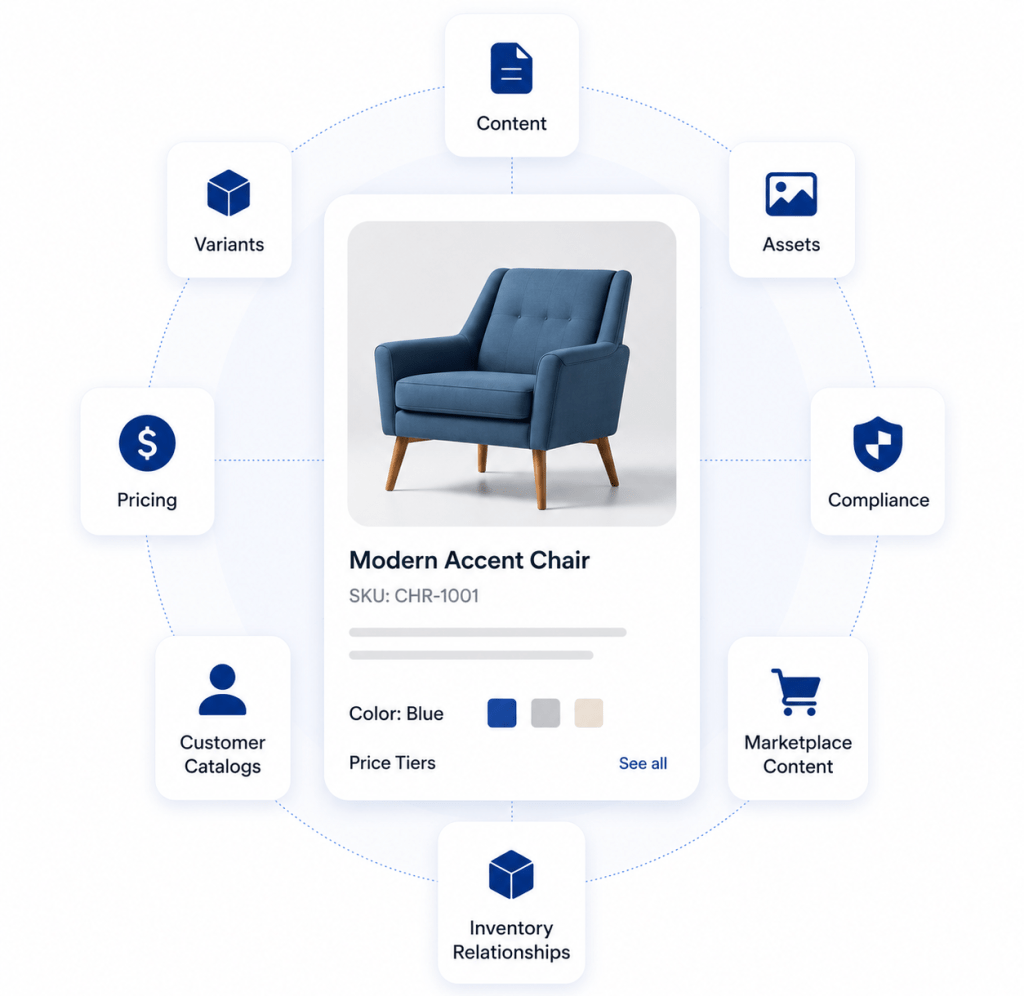
Unified Commerce Starts with Product Data

Most commerce platforms treat products as simple SKUs. Modern wholesalers know products are far more complex.
Every product includes:
  • Copywriting content
  • Technical Attributes
  • Images and digital assets
  • Variants
  • Pricing structures
  • Customer-specific catalogs
  • Compliance information
  • Marketplace-specific content
  • Inventory relationships
DigitBridge creates a single source of truth for product information and connects it directly to channels, inventory, orders, fulfillment, and customer experiences. This foundation enables businesses to scale without increasing operational complexity.
DigitBridge | DigitBridge for Wholesale | Embrace Modern Efficiency
Unified Commerce Starts with Product Data

Most commerce platforms treat products as simple SKUs. Modern wholesalers know products are far more complex.
Every product includes:
  • Copywriting content
  • Technical Attributes
  • Images and digital assets
  • Variants
  • Pricing structures
  • Customer-specific catalogs
  • Compliance information
  • Marketplace-specific content
  • Inventory relationships
DigitBridge creates a single source of truth for product information and connects it directly to channels, inventory, orders, fulfillment, and customer experiences. This foundation enables businesses to scale without increasing operational complexity.
DigitBridge | DigitBridge for Wholesale | Embrace Modern Efficiency

Built for Modern Wholesale Operations


DigitBridge | DigitBridge for Wholesale | Embrace Modern Efficiency

Product Information Management (PIM+)

Centralize and manage:

  • Product catalogs
  • Product digital content
  • Digital line sheets
  • Digital assets
  • Variants
  • Styles, colors, and sizes matrix
  • Channel-specific content
  • Customized information

Create products once and distribute them everywhere.

DigitBridge | DigitBridge for Wholesale | Embrace Modern Efficiency

Customer-Specific Commerce

Support the unique requirements of wholesale selling:

  • Customer-specific pricing
  • Contract pricing
  • Sales rep workflows
  • B2B portals
  • Custom catalogs
  • Digital line sheets
  • Account management

Deliver personalized experiences without manual administration.

DigitBridge | DigitBridge for Wholesale | Embrace Modern Efficiency

EDI & Retail Compliance

DigitBridge supports the operational requirements needed to work with retailers, distributors, and trading partners.
Manage:

  • EDI transactions
  • Purchase orders
  • Inventory feeds
  • Compliance workflows
  • Partner requirements

Reduce manual effort while improving trading partner relationships.

DigitBridge | DigitBridge for Wholesale | Embrace Modern Efficiency

Inventory Visibility

Connect inventory directly to products, customers, and channels.
Gain visibility across:

  • Warehouses
  • Distribution centers
  • 3PL providers
  • Sales channels
  • Wholesale inventory pools

Make better allocation and replenishment decisions with real-time information.

Built for Modern Wholesale Operations


DigitBridge | DigitBridge for Wholesale | Embrace Modern Efficiency

Product Information Management (PIM+)

Centralize and manage:

  • Product catalogs
  • Product digital content
  • Digital line sheets
  • Digital assets
  • Variants
  • Styles, colors, and sizes matrix
  • Channel-specific content
  • Customized information

Create products once and distribute them everywhere.

DigitBridge | DigitBridge for Wholesale | Embrace Modern Efficiency

Customer-Specific Commerce

Support the unique requirements of wholesale selling:

  • Customer-specific pricing
  • Contract pricing
  • Sales rep workflows
  • B2B portals
  • Custom catalogs
  • Digital line sheets
  • Account management

Deliver personalized experiences without manual administration.

DigitBridge | DigitBridge for Wholesale | Embrace Modern Efficiency

EDI & Retail Compliance

DigitBridge supports the operational requirements needed to work with retailers, distributors, and trading partners.
Manage:

  • EDI transactions
  • Purchase orders
  • Inventory feeds
  • Compliance workflows
  • Partner requirements

Reduce manual effort while improving trading partner relationships.

DigitBridge | DigitBridge for Wholesale | Embrace Modern Efficiency

Inventory Visibility

Connect inventory directly to products, customers, and channels.
Gain visibility across:

  • Warehouses
  • Distribution centers
  • 3PL providers
  • Sales channels
  • Wholesale inventory pools

Make better allocation and replenishment decisions with real-time information.

Why Manufacturers & Wholesalers Choose Unified Commerce


DigitBridge | DigitBridge for Wholesale | Embrace Modern Efficiency

One Source of Commerce Data Truth

Eliminate duplicate product and transactional records and disconnected information.

DigitBridge | DigitBridge for Wholesale | Embrace Modern Efficiency

Faster Customer Onboarding

Bring on new wholesale accounts, distributors, marketplaces, and retail partners more efficiently

DigitBridge | DigitBridge for Wholesale | Embrace Modern Efficiency

Better Product Visibility

Ensure product information remains accurate across every customer and channel.

DigitBridge | DigitBridge for Wholesale | Embrace Modern Efficiency

Reduced Operational Complexity

Connect products, pricing, inventory, orders, and customers on a single commerce data foundation to run end-to-end commerce operations.

DigitBridge | DigitBridge for Wholesale | Embrace Modern Efficiency

A Foundation for Future Growth

Support wholesale, DTC, marketplaces, dropship programs, and emerging sales channels from a single AI-powered commerce platform. Achieve hundreds of channels, total visibility, and end-to-end operations without rebuilding your operational tech stack.

Why 3PL Providers Choose Unified Commerce Platform


DigitBridge | DigitBridge for Wholesale | Embrace Modern Efficiency

Reduced Operational Complexity

Connect products, pricing, inventory, orders, and customers on a single commerce data foundation to run end-to-end commerce operations.

DigitBridge | DigitBridge for Wholesale | Embrace Modern Efficiency

A Foundation for Future Growth

Support wholesale, DTC, marketplaces, dropship programs, and emerging sales channels from a single AI-powered commerce platform. Achieve hundreds of channels, total visibility, and end-to-end operations without rebuilding your operational tech stack.

DigitBridge | DigitBridge for Wholesale | Embrace Modern Efficiency

One Source of Commerce Data Truth

Eliminate duplicate product and transactional records and disconnected information.

DigitBridge | DigitBridge for Wholesale | Embrace Modern Efficiency

Faster Customer Onboarding

Bring on new wholesale accounts, distributors, marketplaces, and retail partners more efficiently

DigitBridge | DigitBridge for Wholesale | Embrace Modern Efficiency

Better Product Visibility

Ensure product information remains accurate across every customer and channel.

From Wholesale Operations to Omnichannel Growth


Many brand manufacturers and wholesalers begin by wholeselling exclusively through distributors, retailers, and wholesale customers.

As customer buying behavior evolves, businesses increasingly expand into:

  • Direct-to-consumer (DTC)
  • Marketplaces
  • Dropship programs
  • Omnichannel commerce

The challenge is not only launching a new channel. The challenge is supporting new channels without creating new operational silos and friction.
DigitBridge provides the unified commerce foundation that allows businesses to expand while maintaining operational control.

From Wholesale Operations to Omnichannel Growth


Many brand manufacturers and wholesalers begin by wholeselling exclusively through distributors, retailers, and wholesale customers.
As customer buying behavior evolves, businesses increasingly expand into:

  • Direct-to-consumer (DTC)
  • Marketplaces
  • Dropship programs
  • Omnichannel commerce

The challenge is not only launching a new channel.
The challenge is supporting new channels without creating new operational silos and friction.
DigitBridge provides the unified commerce foundation that allows businesses to expand while maintaining operational control.

Frequently asked questions


What challenges do modern brand manufacturers and wholesalers face?

As commerce becomes more digital and omnichannel, manufacturers and wholesalers face growing pressure to manage complex operations with greater speed, accuracy, and visibility. From product information and customer-specific pricing to inventory management, EDI compliance, fulfillment, digital catalogs, and multi-channel sales, every process generates critical data. When these functions are spread across disconnected systems, organizations struggle with data silos, manual workflows, and operational bottlenecks. The challenge is no longer simply managing current growth—it’s creating a unified, intelligent operation that can scale efficiently and adapt to changing customer demands.

How does Unified Commerce Platform help manufacturers and wholesalers?

Unified Commerce platform connects product information, inventory, orders, fulfillment, customers, and sales channels within a single operating model. This gives manufacturers and wholesalers a single source of truth across their business, improving visibility, reducing manual processes, and creating a more scalable operational foundation for growth.

What is Product Information Management (PIM)?

Product Information Management (PIM) is the process of centralizing and managing product data such as descriptions, specifications, images, attributes, pricing, and digital assets.
For manufacturers and wholesalers, PIM ensures product information stays accurate, consistent, and up to date across ecommerce stores, wholesale catalogs, marketplaces, retailers, distributors, and internal sales and marketing teams.

Why is product data important for wholesale businesses?

Product data is the foundation of modern commerce. Every sales channel, customer, marketplace, retailer, and fulfillment process relies on accurate digital product content information.
Wholesale sales are no longer confined to trade shows, showrooms, and face-to-face meetings. Buyers increasingly expect an omnichannel purchasing experience, supported by accurate digital catalogs and line sheets. To deliver consistent product information across these channels, wholesalers need a system that centralizes and manages product data efficiently.
Poor product data can lead to order errors, inventory discrepancies, inconsistent customer experiences, and increased operational costs. A unified product data platform helps businesses scale more efficiently while maintaining accuracy across every channel.

How do wholesalers manage customer-specific pricing?

Many wholesalers use customer-specific pricing structures that vary by customer, distributor, retailer, buying group, or contract agreement.
Modern commerce platforms help automate these pricing rules by supporting account-specific catalogs, negotiated pricing, quantity discounts, contract pricing, and customer-specific product assortments.

What is EDI and why is it important for wholesalers?

Electronic Data Interchange (EDI) is a standardized method for exchanging business documents such as purchase orders, invoices, inventory updates, and shipping notifications between trading partners.
Many retailers, distributors, and enterprise customers require their wholesale suppliers to comply with EDI standards. By automating EDI workflows, wholesalers can eliminate manual data entry, improve transaction accuracy, accelerate order processing, and strengthen relationships with trading partners.

Can brand manufacturers sell both wholesale and direct-to-consumer (DTC)?

Yes. Many brand manufacturers are expanding beyond traditional wholesale channels and selling directly to consumers through ecommerce stores, marketplaces, and social commerce platforms. Many also support their retail partners through dropshipping programs, fulfilling DTC orders on the retailer’s behalf.
The challenge is managing both business models without creating operational complexity. Unified Commerce platform allows brand manufacturers to support wholesale and DTC operations from a single operation platform while maintaining inventory visibility, pricing controls, and fulfillment efficiency.

How do manufacturers manage products across wholesale, ecommerce, and marketplaces?

The most effective approach is to establish a centralized source of product information within a unified data platform that can distribute product data across all sales channels.
This enables businesses to create products once, manage updates centrally, and maintain consistent, accurate product information across wholesale catalogs, ecommerce stores, online marketplaces, retail partners, and marketing channels—while ensuring compliance with each channel’s unique requirements.

Can DigitBridge integrate with ERP systems?

Yes. Most brand manufacturers and wholesalers continue to rely on their ERP systems—including Microsoft Business Central, NetSuite, SAP, Acumatica, and QuickBooks—for accounting and financial management.
DigitBridge complements these investments by providing a Unified Commerce Platform that centralizes product information, inventory visibility, order management, fulfillment operations, supplier collaboration, and multichannel commerce, enabling teams to operate more efficiently without disrupting their existing ERP.

What is the difference between an ERP and a Unified Commerce Platform?

ERP systems are primarily designed to manage accounting, financial transactions, purchasing, and back-office operations.
Unified Commerce Platforms focus on connecting the operational side of commerce, including product information, inventory, orders, fulfillment, channels, and customer experiences.
Many growing brand manufacturers and wholesalers use both together: the ERP manages financial operations while the Unified Commerce Platform manages other commerce operations.

How does Unified Commerce improve inventory visibility?

Unified Commerce creates a centralized view of inventory across warehouses, distribution centers, 3PL providers, retail locations, marketplaces, and ecommerce channels.
This helps brand manufacturers and wholesalers maximize omnichannel sales, reduce overselling, improve inventory allocation, increase forecasting accuracy, and make better operational decisions based on real-time information.

How does Unified Why are brand manufacturers adopting Unified Commerce Platform? improve inventory visibility?

Brand manufacturers are increasingly selling through multiple channels, supporting more products, and serving more complex customer requirements than ever before.
As commerce operations become increasingly complex, a Unified Commerce Platform brings products, inventory, orders, fulfillment, suppliers, and customer operations together in a single connected ecosystem. This unified approach allows businesses to grow across channels and markets while maintaining efficiency, visibility, and control. More importantly, it establishes a trusted data foundation for future AI initiatives and intelligent automation.

Frequently asked questions


What challenges do modern brand manufacturers and wholesalers face?

As commerce becomes more digital and omnichannel, manufacturers and wholesalers face growing pressure to manage complex operations with greater speed, accuracy, and visibility. From product information and customer-specific pricing to inventory management, EDI compliance, fulfillment, digital catalogs, and multi-channel sales, every process generates critical data. When these functions are spread across disconnected systems, organizations struggle with data silos, manual workflows, and operational bottlenecks. The challenge is no longer simply managing current growth—it’s creating a unified, intelligent operation that can scale efficiently and adapt to changing customer demands.

How does Unified Commerce Platform help manufacturers and wholesalers?

Unified Commerce platform connects product information, inventory, orders, fulfillment, customers, and sales channels within a single operating model. This gives manufacturers and wholesalers a single source of truth across their business, improving visibility, reducing manual processes, and creating a more scalable operational foundation for growth.

What is Product Information Management (PIM)?

Product Information Management (PIM) is the process of centralizing and managing product data such as descriptions, specifications, images, attributes, pricing, and digital assets.
For manufacturers and wholesalers, PIM ensures product information stays accurate, consistent, and up to date across ecommerce stores, wholesale catalogs, marketplaces, retailers, distributors, and internal sales and marketing teams.

Why is product data important for wholesale businesses?

Product data is the foundation of modern commerce. Every sales channel, customer, marketplace, retailer, and fulfillment process relies on accurate digital product content information.
Wholesale sales are no longer confined to trade shows, showrooms, and face-to-face meetings. Buyers increasingly expect an omnichannel purchasing experience, supported by accurate digital catalogs and line sheets. To deliver consistent product information across these channels, wholesalers need a system that centralizes and manages product data efficiently.
Poor product data can lead to order errors, inventory discrepancies, inconsistent customer experiences, and increased operational costs. A unified product data platform helps businesses scale more efficiently while maintaining accuracy across every channel.

How do wholesalers manage customer-specific pricing?

Many wholesalers use customer-specific pricing structures that vary by customer, distributor, retailer, buying group, or contract agreement.
Modern commerce platforms help automate these pricing rules by supporting account-specific catalogs, negotiated pricing, quantity discounts, contract pricing, and customer-specific product assortments.

What is EDI and why is it important for wholesalers?

Electronic Data Interchange (EDI) is a standardized method for exchanging business documents such as purchase orders, invoices, inventory updates, and shipping notifications between trading partners.
Many retailers, distributors, and enterprise customers require their wholesale suppliers to comply with EDI standards. By automating EDI workflows, wholesalers can eliminate manual data entry, improve transaction accuracy, accelerate order processing, and strengthen relationships with trading partners.

Can brand manufacturers sell both wholesale and direct-to-consumer (DTC)?

Yes. Many brand manufacturers are expanding beyond traditional wholesale channels and selling directly to consumers through ecommerce stores, marketplaces, and social commerce platforms. Many also support their retail partners through dropshipping programs, fulfilling DTC orders on the retailer’s behalf.
The challenge is managing both business models without creating operational complexity. Unified Commerce platform allows brand manufacturers to support wholesale and DTC operations from a single operation platform while maintaining inventory visibility, pricing controls, and fulfillment efficiency.

How do manufacturers manage products across wholesale, ecommerce, and marketplaces?

The most effective approach is to establish a centralized source of product information within a unified data platform that can distribute product data across all sales channels.
This enables businesses to create products once, manage updates centrally, and maintain consistent, accurate product information across wholesale catalogs, ecommerce stores, online marketplaces, retail partners, and marketing channels—while ensuring compliance with each channel’s unique requirements.

Can DigitBridge integrate with ERP systems?

Yes. Most brand manufacturers and wholesalers continue to rely on their ERP systems—including Microsoft Business Central, NetSuite, SAP, Acumatica, and QuickBooks—for accounting and financial management.
DigitBridge complements these investments by providing a Unified Commerce Platform that centralizes product information, inventory visibility, order management, fulfillment operations, supplier collaboration, and multichannel commerce, enabling teams to operate more efficiently without disrupting their existing ERP.

What is the difference between an ERP and a Unified Commerce Platform?

ERP systems are primarily designed to manage accounting, financial transactions, purchasing, and back-office operations.
Unified Commerce Platforms focus on connecting the operational side of commerce, including product information, inventory, orders, fulfillment, channels, and customer experiences.
Many growing brand manufacturers and wholesalers use both together: the ERP manages financial operations while the Unified Commerce Platform manages other commerce operations.

How does Unified Commerce improve inventory visibility?

Unified Commerce creates a centralized view of inventory across warehouses, distribution centers, 3PL providers, retail locations, marketplaces, and ecommerce channels.
This helps brand manufacturers and wholesalers maximize omnichannel sales, reduce overselling, improve inventory allocation, increase forecasting accuracy, and make better operational decisions based on real-time information.

Why are brand manufacturers adopting Unified Commerce Platform?

Brand manufacturers are increasingly selling through multiple channels, supporting more products, and serving more complex customer requirements than ever before.
As commerce operations become increasingly complex, a Unified Commerce Platform brings products, inventory, orders, fulfillment, suppliers, and customer operations together in a single connected ecosystem. This unified approach allows businesses to grow across channels and markets while maintaining efficiency, visibility, and control. More importantly, it establishes a trusted data foundation for future AI initiatives and intelligent automation.